


Introduction
Many people assume DVI disappeared when HDMI became the standard for TVs and home entertainment systems. However, DVI cables continue to be used in offices, factories, hospitals, control rooms, and commercial display projects around the world.
So what exactly does a DVI cable do in modern display systems, and why do many professional environments still rely on it? Understanding its role helps users make better decisions when maintaining or upgrading existing equipment.

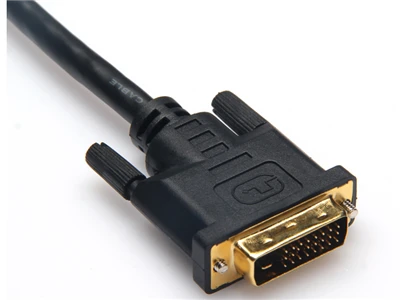
The Main Function of a DVI Cable
The primary job of a DVI cable is simple: it transfers video signals from a source device to a display device.
Typical connections include:
- Desktop computer to monitor
- Industrial PC to operator display
- Workstation to professional monitor
- Control system to display terminal
Unlike some newer display interfaces, DVI was designed with a strong focus on stable and reliable video transmission. For systems that only require image output, DVI often provides everything needed without unnecessary complexity.
Why DVI Is Still Used Today
Technology moves quickly, but industrial and commercial equipment often remains in service for many years.
A gaming laptop may be replaced every three years, while a factory machine or medical imaging system may remain operational for more than ten years.
Because of this, many organizations continue using DVI for several reasons:
- Existing equipment already uses DVI connections.
- Upgrading display infrastructure can be expensive.
- DVI provides stable video performance.
- Many industrial devices were designed around DVI standards.
- Compatibility with older systems remains important.
For many businesses, replacing a perfectly working display system simply to adopt a newer connector offers little practical value.
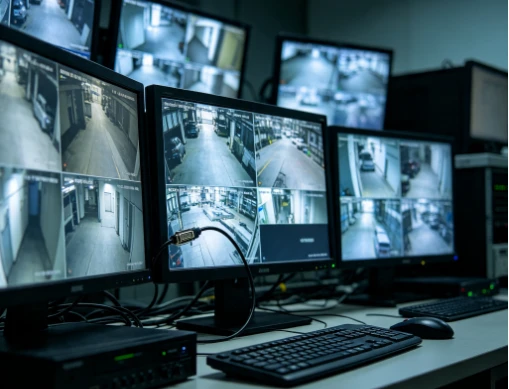
Industries That Still Depend on DVI
Although consumers see HDMI almost everywhere, DVI remains common in professional applications.
Examples include:
1. Industrial Automation
Production lines and manufacturing systems often use industrial computers connected to control displays through DVI interfaces.
2. Medical Equipment
Medical imaging systems frequently operate for long service cycles, making long-term compatibility essential.
3. Security Monitoring
Control rooms and surveillance systems often continue using DVI-enabled displays because reliability is more important than multimedia features.
4. Commercial Displays
Digital signage, information terminals, and display walls may continue using DVI depending on the original system design.
5. Office Workstations
Many offices still use monitors that include DVI ports, especially in environments where equipment replacement cycles are longer.
DVI vs HDMI in Professional Environments
HDMI dominates consumer electronics, but professional environments have different priorities.
| Feature | DVI | HDMI |
|---|---|---|
| Video transmission | Yes | Yes |
| Audio support | Usually no | Yes |
| Legacy equipment compatibility | Excellent | Moderate |
| Industrial adoption | High | Growing |
| Consumer electronics usage | Lower | Very high |
For home theaters and gaming consoles, HDMI is usually the preferred choice because it combines audio and video in one cable.
For industrial systems and office environments, DVI often remains a practical and reliable option.
When Should You Use DVI Today?
DVI still makes sense in several situations:
- You are maintaining existing equipment that uses a DVI 24+5 Cable or DVI 24+1 Cable.
- Your display system already uses DVI connections.
- Audio transmission is not required.
- Long-term compatibility is more important than advanced multimedia features.
- The project involves industrial or commercial installations.
For example, our factory supplies DVI 24+5 Cable for legacy systems that need both digital and analog compatibility, while DVI 24+1Cable is a practical choice for digital-only display connections. In these situations, choosing the right DVI cable can reduce replacement costs and keep systems running smoothly without unnecessary upgrades.


Does DVI Have Limitations?
Like every technology, DVI has limitations.
Compared with modern interfaces, DVI generally offers:
- Limited support for audio transmission
- Reduced support for advanced gaming features
- Lower compatibility with modern laptops
- Fewer options for consumer electronics
For new gaming systems, smart TVs, and home entertainment setups, HDMI or DisplayPort may be better choices.
However, these limitations do not reduce DVI's value in applications where stable video output remains the primary requirement.
Will DVI Disappear Completely?
Probably not anytime soon.
Industrial equipment often remains in operation for ten to fifteen years or even longer. As long as businesses continue using these systems, replacement cables and compatible hardware will continue to be needed.
The consumer market may move on quickly, but industrial technology usually evolves at a slower pace.
For this reason, DVI is likely to remain part of the display industry for many years.
Choosing a Reliable DVI Cable Supplier
For distributors, OEM buyers, and industrial customers, product consistency is often more important than the latest specifications.
A reliable cable manufacturer should provide:
- Stable manufacturing quality
- Consistent connector performance
- International compliance standards
- OEM and ODM support
- Long-term supply capability
These factors help reduce maintenance costs and improve system reliability throughout the product lifecycle.

Conclusion
The role of DVI in modern display systems is no longer centered on consumer electronics. Instead, DVI continues to support industrial equipment, office systems, medical devices, and commercial installations where stable video transmission and compatibility remain essential.
While newer technologies continue to grow, DVI still serves an important purpose in professional environments where reliability matters more than trends.
FAQ
1. What does a DVI cable do?
A DVI cable transfers video signals from a source device to a display device.
2. Does DVI carry audio?
Most DVI connections support video only and do not transmit audio.
3. Is DVI still used today?
Yes. DVI remains common in industrial, office, and commercial systems.
4. Why do factories still use DVI?
Because many industrial systems have long operating lifecycles and prioritize compatibility.
5. Is DVI better than HDMI?
Not necessarily. The best choice depends on the application.
6. Can DVI support Full HD displays?
Yes. DVI easily supports 1080p video output.
7. Can DVI connect to HDMI displays?
Yes. Adapters and conversion cables are widely available.
8. Will DVI disappear in the near future?
It is unlikely to disappear quickly because many professional systems still depend on it.