


Introduction
Sourcing DisplayPort and HDMI cables for a business requires more than finding a low price. Importers, distributors, wholesalers, and system integrators need products that match their technical requirements and remain consistent across repeat orders. This guide explains how to define cable specifications, assess samples, plan bulk purchases, and prepare for long-term supply.
1. Define Your Cable Requirements First
Before contacting a DisplayPort cable supplier or HDMI cable manufacturer, identify the products your customers need.
Prepare a specification sheet that includes:
- Connector types at both ends
- Required resolution and refresh rate
- Cable length and installation environment
- Packaging and labeling requirements
- Expected order quantity
For example, a cable intended for a standard office monitor may have different requirements from one designed for a high-refresh-rate gaming display.
Clear specifications help suppliers quote accurately and reduce misunderstandings during production.

2. Match Performance Claims to the Actual Product
Do not select cables based on version numbers alone. Confirm the required bandwidth and features for the complete connection, including the source device, display, and cable.
For DisplayPort products, buyers can consult VESA's DisplayPort certified product database to check listed products.
For HDMI products, review the official HDMI cable guide and certification information to understand cable categories and applicable certification programs.
Ask suppliers for model-specific specifications and supporting test records. Make sure any performance claims apply to the exact cable being quoted, rather than a similar product.
3. Approve Samples Before Bulk Production
Samples help buyers confirm that a product meets the agreed requirements before committing to a large order.
Check connector fit, cable flexibility, outer jacket quality, and the intended display performance. Test the cable with compatible equipment under the conditions expected in actual use.
Record the approved model, length, construction, packaging, and required performance. Keep a reference sample where practical so future orders can be compared against the same standard.
For distributors and private-label brands, this step can reduce the risk of receiving products that differ from the sample originally approved.
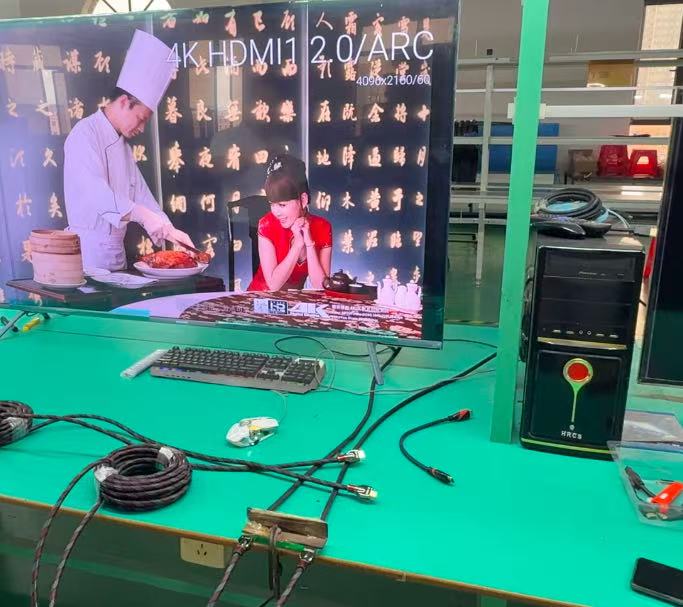
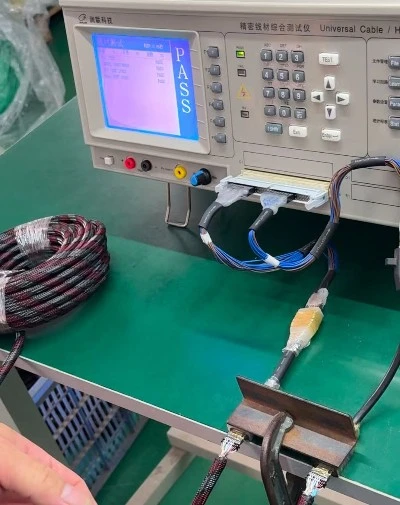
4. Check Production and Quality Controls
A supplier should be able to explain how it manages materials, assembly, and finished-product inspection.
Ask how it identifies defective units, records test results, and handles changes to materials or components. If the supplier uses subcontractors, clarify which company is responsible for production quality.
Review its quality control process and ask what inspection records can be provided for your order. The goal is to understand how quality is maintained across a batch, not simply to receive a general promise.
5. Compare the Full Cost of Bulk Orders
The lowest unit price may not represent the lowest total cost.
When comparing quotes, consider:
- Minimum order quantity (MOQ)
- Sample and customization costs
- Packaging and labeling
- Shipping terms and delivery time
- Inspection requirements
- Defect handling and replacement terms
For wholesale buyers, these details affect margins and the ability to fulfill customer orders on time. Confirm which costs are included in the quotation and which may be charged separately.
6. Plan Customization and Repeat Orders
If you need branded products, ask about custom cable lengths, colors, packaging, and labeling. Confirm the available options, minimum quantities, sample approval process, and any additional production costs.
You should also agree on how future changes will be handled. A connector, material, or packaging change may affect compatibility or the finished product's appearance.
Suppliers offering suitable OEM and ODM manufacturing services may be able to support private-label projects and ongoing product development.
7. Build a Long-Term Supply Plan
For recurring orders, document the approved specifications, expected demand, delivery schedule, and process for handling product changes.
Discuss production lead times and how much notice the supplier needs for repeat orders. If you distribute several cable types, consider planning purchases by product category to make inventory management easier.
A clear supply plan helps both parties prepare for demand changes without relying on last-minute orders.

Conclusion
Successful DisplayPort and HDMI cable sourcing starts with clear specifications and continues through sample approval, production checks, cost planning, and repeat-order management. For B2B buyers, a dependable supplier should understand the intended application and provide clear information about product performance and order requirements. A structured sourcing process can reduce avoidable problems and support more consistent purchasing.
FAQ
1. How do I find a reliable DisplayPort cable supplier?
Compare technical specifications, request samples, review testing information, and confirm production and delivery terms.
2. Does a higher cable version always mean better performance?
No. The cable must support the required features, and the connected devices must support them as well.
3. Can I order custom DisplayPort and HDMI cables?
Some suppliers offer custom lengths, colors, labels, or packaging. Availability and minimum quantities vary.
4. How can I check cable certification claims?
Ask for model-specific documentation and check official certification resources where applicable.
5. What affects the price of bulk cable orders?
Specifications, materials, cable length, quantity, packaging, customization, and shipping can all affect the price.
6. How can I maintain consistency across repeat orders?
Keep approved specifications and reference samples, and agree on how material or design changes must be approved.
7. Should I choose a supplier based only on price?
No. Product performance, quality controls, delivery reliability, and defect-handling terms also affect the total cost.