

In the realm of high - definition audio and video transmission, HDMI cables play a pivotal role. As a Fiber HDMI supplier, I'm often asked about the differences between Fiber HDMI and traditional HDMI cables. This blog post aims to delve into these disparities to help you make an informed decision when choosing the right cable for your needs.
1. Structure and Composition
Traditional HDMI cables are typically made of copper conductors. Copper is a well - known electrical conductor, and in HDMI cables, it is used to transmit electrical signals that carry audio and video data. These cables usually have multiple copper wires bundled together, surrounded by insulation and an outer protective sheath. The number of wires and their gauge can vary depending on the cable's quality and intended use.
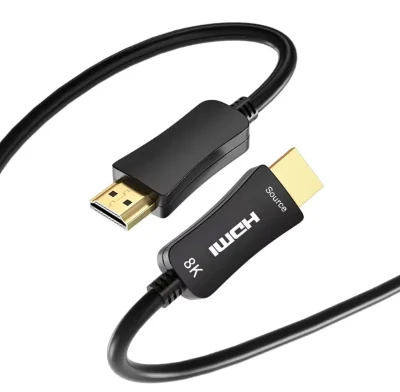
On the other hand, Fiber HDMI cables use optical fibers as the primary transmission medium. Optical fibers are made of thin strands of glass or plastic that can transmit light signals. In a Fiber HDMI cable, the optical fibers are encased in a protective layer, often with additional strength members to prevent breakage. The use of optical fibers allows for a different way of data transmission compared to copper - based traditional HDMI cables.


2. Transmission Distance
One of the most significant differences between Fiber HDMI and traditional HDMI cables is their transmission distance. Traditional HDMI cables have limitations when it comes to long - distance transmission. Due to the resistance of copper, the signal can degrade over longer lengths. For standard HDMI cables, the practical limit for high - quality 4K transmission is usually around 15 meters. Beyond this distance, the signal may experience attenuation, resulting in a loss of picture quality, color accuracy, and audio fidelity.
Fiber HDMI cables, however, can transmit signals over much longer distances. Thanks to the low attenuation of light in optical fibers, it is possible to achieve high - quality 4K and even 8K transmission over distances of up to 100 meters or more. This makes Fiber HDMI cables an ideal choice for large - scale installations such as home theaters, conference rooms, and auditoriums where long cable runs are required. If you are looking for long - distance 4K or 8K transmission solutions, you can explore our 4k Hdmi Fiber Cables and 8k Hdmi Fiber Cables.
3. Bandwidth and Data Transfer Rate
Bandwidth is another crucial factor in HDMI cable performance. Traditional HDMI cables have a limited bandwidth, which restricts the amount of data that can be transmitted per second. For example, older HDMI versions may have a bandwidth of 10.2 Gbps, which is sufficient for standard 1080p video but may struggle with higher - resolution content such as 4K or 8K.
Fiber HDMI cables offer significantly higher bandwidth. They can support data transfer rates of up to 48 Gbps or even more in some cases. This high bandwidth allows for seamless transmission of high - resolution video, including 8K at 60Hz or even 10K in the future. With the increasing popularity of high - end gaming, 8K TVs, and professional video production, the high bandwidth of Fiber HDMI cables becomes a distinct advantage. Our Fiber Hdmi Kables are designed to meet these high - bandwidth requirements.
4. Immunity to Electromagnetic Interference (EMI)
Traditional HDMI cables made of copper are susceptible to electromagnetic interference. EMI can come from various sources such as power lines, motors, and other electronic devices. When a traditional HDMI cable is exposed to EMI, the electrical signals in the cable can be disrupted, leading to artifacts in the video or audio. This can be particularly problematic in environments with a lot of electronic equipment.
Fiber HDMI cables are immune to EMI because they transmit light signals instead of electrical signals. The optical fibers in these cables are not affected by electromagnetic fields, ensuring a clean and stable signal transmission. This makes Fiber HDMI cables a great choice for use in areas with high levels of electromagnetic interference, such as data centers, industrial settings, and even some home environments with a lot of electronic devices.

5. Flexibility and Durability
In terms of flexibility, traditional HDMI cables are generally more flexible than Fiber HDMI cables. Copper wires can be bent and twisted more easily, which makes them suitable for applications where the cable needs to be routed through tight spaces or moved around frequently.
However, when it comes to durability, Fiber HDMI cables have an edge. The protective layers around the optical fibers make them more resistant to physical damage, such as cuts and abrasions. Additionally, since they are not affected by corrosion like copper cables, they have a longer lifespan in harsh environments.
6. Cost
Cost is often a consideration when choosing between Fiber HDMI and traditional HDMI cables. Traditional HDMI cables are generally more affordable, especially for shorter lengths. They are widely available in the market, and the manufacturing process for copper - based cables is well - established, which helps keep the costs down.
Fiber HDMI cables, on the other hand, are more expensive. The technology involved in manufacturing optical fibers and the additional components required for signal conversion and transmission contribute to the higher cost. However, considering their long - distance capabilities, high bandwidth, and immunity to EMI, the investment in Fiber HDMI cables can be justified for applications where high - quality, long - distance transmission is essential.
Conclusion
In conclusion, the differences between Fiber HDMI and traditional HDMI cables are significant. Traditional HDMI cables are a cost - effective option for short - distance, standard - resolution applications. They are flexible and widely available. However, if you need to transmit high - resolution content over long distances, or if you are in an environment with high levels of electromagnetic interference, Fiber HDMI cables are the better choice.
As a Fiber HDMI supplier, we offer a wide range of high - quality Fiber HDMI cables to meet your specific needs. Whether you are setting up a home theater, a professional audio - video system, or a large - scale installation, our cables can provide the performance you require. If you are interested in purchasing our Fiber HDMI cables or have any questions about our products, please feel free to contact us for a procurement discussion. We are committed to providing you with the best solutions for your audio - video transmission needs.
References
- "HDMI Technology Overview" - HDMI Licensing, LLC
- "Optical Fiber Communication Principles" - textbook on optical fiber technology