


Introduction
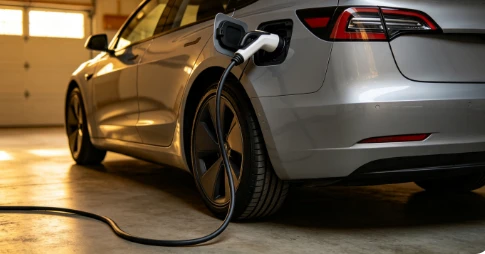
EV chargers handle high electrical loads for extended periods, so safety is just as important as charging speed. A quality EV charger should use multiple layers of protection to help prevent electrical faults, overheating, and charging problems.
Whether you are an EV owner, distributor, installer, or sourcing manager, understanding EV charger safety protection can help you choose the right product and evaluate an EV charger manufacturer more effectively.

What Safety Protection Should an EV Charger Have?
A quality EV charger may include several protection functions, depending on its design, power rating, application, and target market.
1. Overcurrent Protection
Overcurrent protection monitors the charging current and helps prevent excessive current from damaging electrical components. If the current exceeds the designed operating range, the charger can reduce or stop charging.
This is particularly important for higher-current products such as 32A EV chargers.
2. Overvoltage and Undervoltage Protection
An EV charger needs to operate within its specified voltage range. Overvoltage and undervoltage protection can help protect the charger when the input voltage becomes abnormal.
For buyers, checking the rated voltage and protection specifications is an important part of EV charger quality control.
3. Overtemperature Protection
Charging components, connectors, and cables can generate heat during operation. Temperature monitoring helps detect excessive heat and can trigger protective action when necessary.
A quality charger should therefore consider not only electrical performance but also thermal management.
4. Leakage and Ground Protection
Electrical faults can create unwanted current paths. Leakage protection and ground protection are designed to help reduce electrical safety risks.
IEC 61851-1 covers EV supply equipment characteristics, EV connections, and electrical safety requirements. It also includes requirements related to cable protection and protection equipment. IEC 61851-1 provides the official standard information.
5. Short-Circuit and Surge Protection
Short circuits and electrical surges can damage charging equipment. Appropriate protection can help the charger respond to abnormal electrical conditions and reduce the risk of component damage.
The exact protection design depends on the charger architecture and the requirements of the target market.
6. Cable and Connector Protection
Safety does not stop at the control box. The EV charging cable and connector must also be suitable for the rated current, environment, and charging application.
For example, cable structure, connector rating, insulation, temperature resistance, and mechanical durability should all be considered when selecting an EV charger.
For different connector and cable configurations, see our EV Charger Cable range.
EV Charger Safety Is More Than a List of Protection Functions
A safe EV charger is a complete system, not simply a box containing several protective components.
A well-designed product combines:
- Hardware protection for abnormal electrical conditions
- Temperature monitoring for thermal safety
- Charging control to manage current and voltage
- EV-to-EVSE communication for controlled charging
- Cable and connector protection for the physical connection
This is why buyers should look beyond a simple "number of protection functions" when comparing EV charger suppliers.
For example, our 32A Portable EV Charger includes multiple protection functions, including leakage, overvoltage, undervoltage, overcurrent, ground, overtemperature, surge, and lightning protection. Product specifications should always be checked against the requirements of the intended application.
How to Check an EV Charger Before Buying
If you are purchasing an EV charger for personal use, distribution, installation, or an OEM project, consider asking these questions:
- What protection functions does the charger include?
- What are its rated voltage and current?
- Which charging standards and connector types are supported?
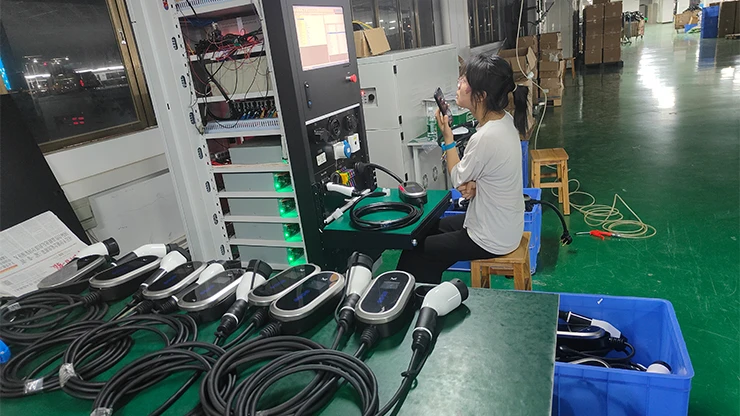
- What testing is performed before shipment?
- What certifications or compliance documents are available?
- Are the cable and connector specifications clearly defined?
- Can the manufacturer provide samples for evaluation?
- Can the supplier support OEM or ODM requirements?
For B2B buyers, supplier capability matters as much as the product specification. A professional EV charger manufacturer should be able to explain its testing process, product configuration, quality-control procedures, and customization options.
Our 22kW EV Wall Charger, for example, is designed for residential, commercial, and public charging applications and supports different connector standards and OEM/ODM requirements.
Safety Standards and Compliance
EV charger requirements can vary by country, electrical system, installation method, and product type. Buyers should therefore avoid assuming that one certification automatically covers every market.
IEC 61851-1 is an important international standard for conductive EV charging systems and addresses EVSE operating conditions, connections, and electrical safety. For product-specific compliance, buyers should request the applicable documentation from the manufacturer.
For practical consumer electrical-safety guidance, Electrical Safety First also provides information about EV charging safety.

What Should B2B Buyers Ask an EV Charger Manufacturer?
For distributors, brands, installers, and project developers, a good supplier evaluation should cover more than price.
Ask about:
- Protection functions and technical specifications
- Applicable standards and certifications
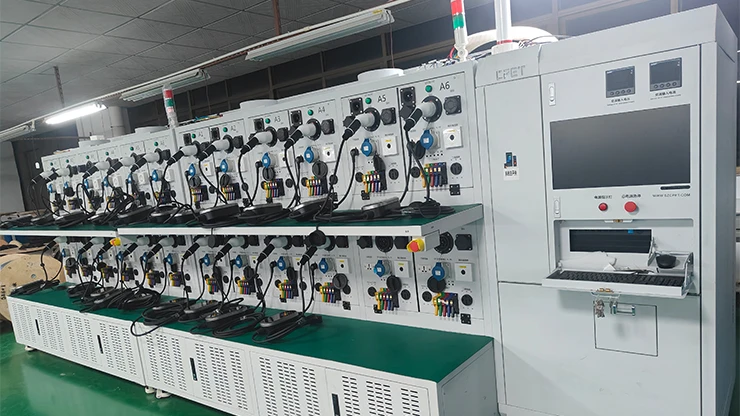
- Factory testing and quality control
- Connector and cable options
- Sample availability
- OEM/ODM capabilities
- Packaging, labeling, and private-label options
Choosing a manufacturer that can support both technical requirements and product customization can make the sourcing process more efficient.
FAQ
2. Why does an EV charger need overcurrent protection?
It helps prevent excessive current from damaging electrical components and supports safer charging operation.
3. Why is temperature protection important?
Temperature monitoring helps detect excessive heat and allows the charger to take protective action when necessary.
4. Is a higher-power EV charger less safe?
Not necessarily. Safety depends on the complete electrical design, protection system, installation, cable rating, and applicable requirements.
5. How can I check whether an EV charger is safe?
Review the technical specifications, protection functions, testing documentation, applicable standards, and manufacturer's quality-control process.
6. Are EV charger safety requirements the same in every country?
No. Requirements can vary according to local regulations, electrical systems, installation conditions, and product type.
7. Can EV chargers be customized for B2B projects?
Many manufacturers offer OEM and ODM options such as connector configurations, cable lengths, labeling, packaging, branding, and other product specifications.